
What a demo account actually is
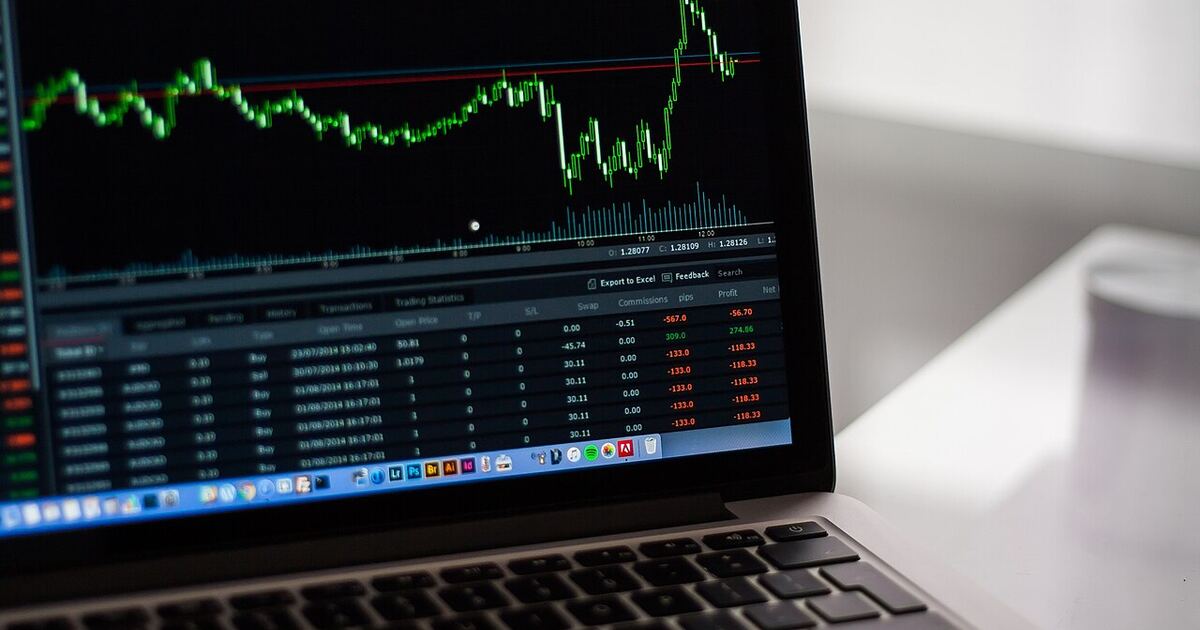
A demo account is a free practice account offered by most brokers. You get a virtual balance, a login for the trading platform and prices that follow the real market. You can place buy and sell orders, set stop-loss and take-profit levels, open and close positions and watch the balance change, all without depositing money.
The balance is only a number in the broker's system. Nobody can withdraw it, and nothing you win or lose affects your real finances. That is exactly why a demo is useful for a beginner: mistakes are free. If you are still unsure what you are practising, start with our guide on what forex trading is and come back here afterwards.
Why a demo account is worth your time
New traders usually lose money in the first weeks for boring reasons: they click the wrong button, they do not understand lot size, or they forget to set a stop-loss. A demo account removes the cost of these lessons. You can use it to learn several things.
- The platform. Where the order ticket is, how to change a stop-loss, how to close part of a position, how to read the account history.
- Lot size and pip value. You see in real time how much one pip is worth for a given lot. Our guide to lots, pips and leverage explains the arithmetic.
- Costs. You will notice that every trade starts slightly negative because of the spread. See spread, commission and swap.
- Your own habits. Do you cut winners early? Do you add to losing trades? A journal kept during demo trading shows this clearly.
- Your plan. A rule set can be tested for a few weeks before real money is involved.
How to open a demo account, step by step
The exact screens differ between brokers, but the process is similar almost everywhere. Here is the typical path, using Exness as the example.
- Go to the broker through a secure link and register with your email address and country of residence. Auron FX is not the official site of any broker, so always check the address bar before typing a password.
- Confirm your email if the broker asks for it.
- In your personal area, look for the option to open a new account and choose the demo type instead of the real type.
- Pick the platform, for example MetaTrader 4 or MetaTrader 5, and the account type that you would like to practise on.
- Set a virtual starting balance. Choose a number close to the real amount you might deposit later, not a million dollars.
- Download the platform or use the web terminal, and log in with the account number, password and server name that the broker shows you.
If login fails, the usual cause is the wrong server name. Our MT4 and MT5 guide shows how to find the right one. For full registration and verification details, see our Exness registration walkthrough.
Open a demo account with Exness
How to practise so the demo teaches you something
Many people open a demo, place random trades for two days and decide that trading is easy or impossible. That is not practice. Use a structure.
Set a realistic virtual balance
If you plan to start with 500 US dollars, set the demo balance to 500. A demo with 100,000 units of virtual money lets you open positions that you would never afford later, and the habits you build will not transfer.
Write the rules before you trade
Decide which pair you trade, at what time of day, how much you risk per trade and when you stop for the day. Our guide to a trading plan and journal gives a template. Then follow the rules even when you feel the urge to break them.
Risk a fixed small percentage
A common teaching rule is to risk a small, fixed share of the balance on each trade. As a calculation example only: with a 500 balance and a risk of 1 percent, you accept a loss of 5 on a trade. If your stop-loss is 25 pips away, the position size must make each pip worth 0.20. Working this out each time builds the habit described in risk management for beginners.
Keep a journal
Write the date, pair, direction, entry, stop, target, result and one sentence about why you entered. After 30 to 50 trades you will see patterns in your own behaviour that no book can show you.
What a demo account cannot teach you
A demo is a good flight simulator, but it is not a real flight. Several differences matter.
- Emotions. Losing virtual money does not hurt. Losing money you worked for does, and it changes decisions. Traders who were disciplined on demo often become hesitant or reckless on a real account.
- Execution. On a demo, orders are often filled at the quoted price. On a real account you can see slippage, especially at news time, and requotes or delays are possible depending on the broker and conditions.
- Spreads and swaps. Demo conditions can differ from live ones. Check the real account's costs before you assume your demo results will repeat.
- Withdrawal and funding. A demo does not teach you how deposits, verification and withdrawals work. See Exness deposit and withdrawal methods for that part.
Mistakes when moving from demo to real
This is where most beginners get into trouble. Watch for these.
- Moving too early. A few lucky winning days on demo are not proof of a method. Without a written plan and a journal of dozens of trades, you have no evidence.
- Increasing size instantly. Some people practise with 0.01 lot and then open 0.50 lot on the first real day because they feel confident. Start with the same size you used on demo.
- Depositing money you cannot lose. Never fund a real account with rent, savings or borrowed money. Use only an amount you can lose without damage to your life.
- Changing the method. The strategy that you tested for a month is replaced by guessing on the first losing day. Keep the rules that you tested, or go back to demo to change them.
- Ignoring costs. A system that looked slightly profitable on demo may be negative after spread, commission and swap.
- Trusting signals sold online. After the move to real, some beginners buy "guaranteed signals" or paid groups. There is no guaranteed profit in trading. Read our guide to forex scams and fake brokers before paying anyone.
Do demo accounts expire, and how many can you open?
Policies differ. Some brokers close demo accounts after a period of inactivity, and some allow several demo accounts at the same time. The rules are in your personal area or in the broker's terms. If your demo disappears, simply open a new one. Keep your journal in a separate file so that your progress does not depend on the account.
When is a demo trader ready for a small real account?
There is no magic date. A reasonable checklist is: you have a written plan, you have followed it on at least several dozen demo trades, you always set a stop-loss, you know how to size a position from a risk amount, and your journal shows that you can stay disciplined. Even then, begin with a small deposit and treat the first weeks as paid training, not as income. Before you register, read the Exness review for account types and warnings, and consider whether trading is legal and suitable where you live; see is forex trading legal in my country.
Practise first with an Exness demo
Risk warning
Forex and CFDs are complex products with a high risk of losing money quickly because of leverage. Many retail clients lose money, and good demo results do not guarantee similar results on a real account. Trade only with money you can afford to lose entirely. You must be 18 or older. Auron FX is an independent guide, not a broker, and this article is education, not personal investment advice.